

Artificial intelligence is rapidly reshaping how people use apps, search for information, and interact with digital devices. Two of the most influential players in this space—OpenAI and Google—are continuously developing new technologies that impact millions of users worldwide.
From AI-powered chatbots like ChatGPT to smart assistants integrated into Android, these companies are driving major changes in mobile apps and digital services. This article explores what they are building next based on publicly available information and confirmed developments.
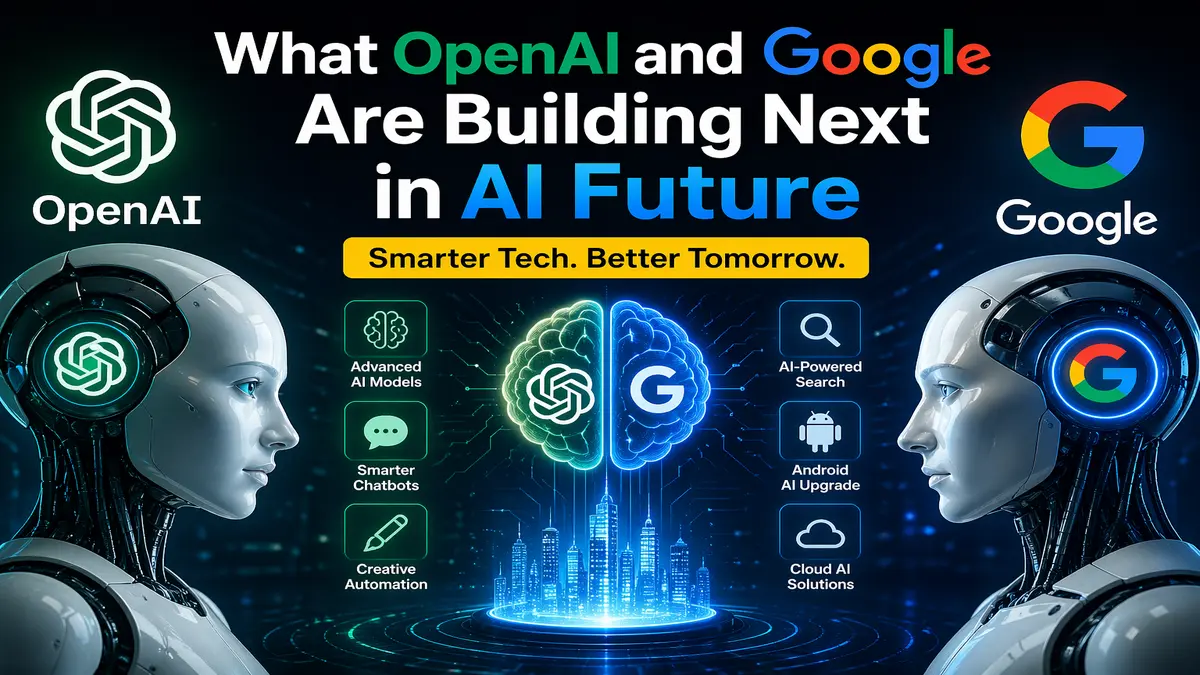
Table of Contents
The Current State of AI Development
AI Integration Across Apps
AI is no longer limited to research labs. Today, it is integrated into everyday applications such as:
- Messaging apps
- Search engines
- Content creation tools
- Mobile operating systems
For example:
- ChatGPT is used for writing, coding, and problem-solving.
- TikTok uses AI to personalize content recommendations.
- Google Search integrates AI to improve search results.
These implementations are confirmed through official product releases and company announcements.
What OpenAI Is Building Next
1. More Advanced AI Models
OpenAI continues to develop more capable AI systems with improved reasoning, accuracy, and safety.
Verified trends include:
- Better understanding of complex questions
- Reduced incorrect or misleading outputs
- Improved ability to follow instructions
These improvements are documented in OpenAI’s official updates and research publications.
2. Multimodal Capabilities
Modern AI systems are becoming multimodal, meaning they can process:
- Text
- Images
- Audio
- Video
For example, newer versions of ChatGPT can analyze images and generate responses based on visual input. This capability is officially described in OpenAI product documentation.
3. Integration into Everyday Tools
OpenAI is working on embedding AI into:
- Productivity tools
- Mobile apps
- Developer platforms
This allows developers to build smarter apps using AI APIs provided by OpenAI.
What Google Is Building Next
1. AI-Powered Search Evolution
Google is transforming how search works by integrating AI-generated answers directly into search results.
Key developments include:
- AI summaries in search results
- Context-aware responses
- More conversational search experiences
These features have been announced in official Google events and blog posts.
2. Smarter Android Experience
Android continues to evolve with AI-powered features such as:
- Smart replies in messaging
- Voice recognition improvements
- Real-time translation
These features are confirmed in Android release notes and developer updates.
3. AI Models and Assistants
Google is also advancing its own AI systems, including:
- AI assistants integrated into devices
- Tools for developers
- Cloud-based AI services
These are documented through Google Cloud and AI product announcements.
Key Technologies Driving the Future
Machine Learning and Data
Both companies rely on machine learning trained on large datasets. This allows systems to:
- Recognize patterns
- Improve over time
- Provide personalized experiences
Cloud Computing
Cloud infrastructure enables scalable AI services used by millions of users simultaneously.
Natural Language Processing (NLP)
NLP allows AI systems like ChatGPT and Google tools to understand and generate human language effectively.
What This Means for Users
The developments from OpenAI and Google have direct impacts on everyday users:
- Faster access to information through AI-powered search
- More personalized app experiences
- Improved productivity tools for writing, coding, and research
- Enhanced accessibility, such as voice commands and translation
These benefits are already visible in widely used platforms and continue to expand.
Pros and Cons
Advantages
- Increased efficiency in daily tasks
- Better user experience in apps
- Automation of repetitive work
- Improved accessibility features
Limitations
- AI systems can still produce incorrect information
- Privacy concerns related to data usage
- Dependence on internet connectivity
- Ongoing need for human oversight
These limitations are acknowledged in official documentation from both companies.
Future Outlook
Based on confirmed trends and official announcements, the future of AI development is likely to include:
- Deeper integration into mobile apps
- More accurate and reliable AI systems
- Expansion of multimodal capabilities
- Greater focus on privacy and safety
However, the exact timeline and full scope of future innovations cannot be confirmed beyond what companies publicly disclose.
Conclusion
OpenAI and Google are shaping the next generation of digital experiences through continuous AI innovation. From smarter search engines to advanced chatbots and intelligent mobile systems, their technologies are becoming essential parts of everyday life.
For users, this means more powerful tools—but also a need to stay informed about how these technologies work.
Stay updated with TopApps.blog for the latest insights on apps, AI, and digital trends.